Data & Tools · May 29, 2025 · 10 min read
15 Essential Tools for Effective Trading Performance Analysis
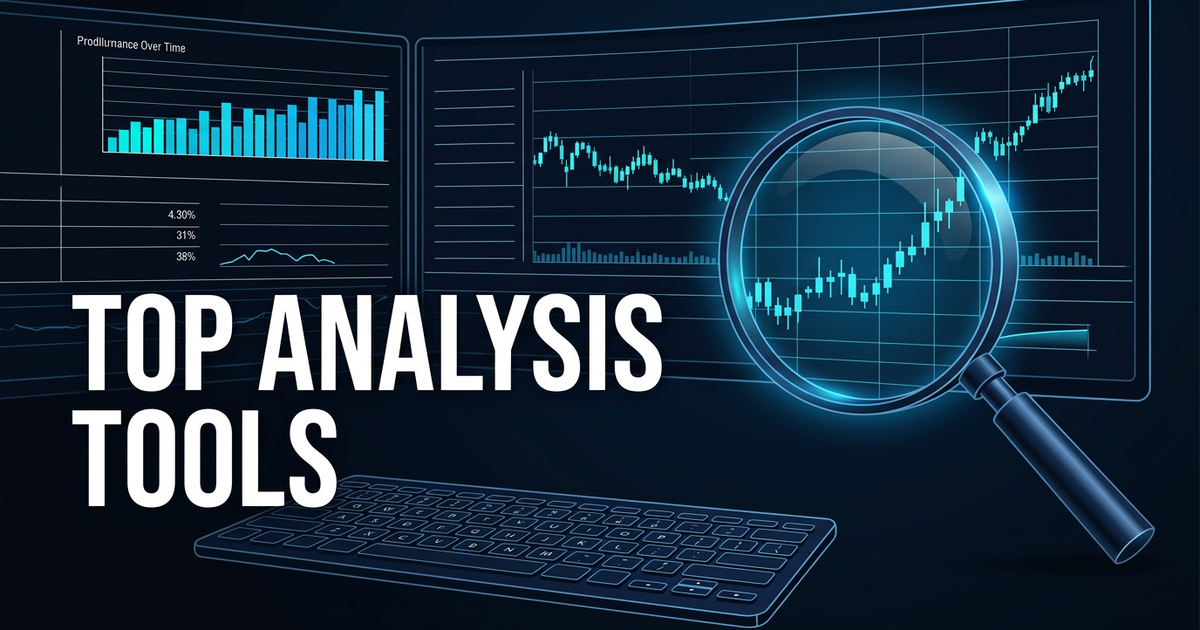
Trading in today's dynamic market requires more than intuition and luck. Understanding your performance with the right tools can elevate your trading strategies from average to exceptional. In this article, we'll explore a selection of essential tools designed to optimize your trading performance analysis and help you make informed decisions.
1. Understanding the Importance of Trading Analysis
Grasping the essentials of trading performance analysis helps in identifying strengths and weaknesses in your trading strategy, ensuring continuous improvement. It's crucial to have a keen eye on your past trades—did they yield satisfactory results, or did they fall short of your expectations? Each trade tells a story, and by scrutinizing these stories, you can tailor your strategies to enhance your odds of success. From assessing market conditions to understanding your emotional responses during trades, every piece of data can contribute to more calculated decisions.
In the constantly evolving world of trading, staying updated with the latest market trends and economic indicators becomes imperative. Utilizing market analysis tools not only aids in self-improvement but also in anticipating future moves. Traders who succeed often use a blend of historical data and current market sentiments to forecast potential changes. Such predictive insights can be gathered from understanding market cycles, utilizing technical analysis tools and embedding data-driven insights into your strategy.
2. Trade Loggers and Their Role
Trade loggers help keep track of all transactions, providing a detailed overview of your trades and facilitating a thorough analysis. With these tools, you can maintain an organized history of all your trades -- from entry and exit points to trading volume. Imagine having a built-in accountability partner that assists you in capturing your thought process at the moment of decision-making. By regularly reviewing logged data, discrepancies in strategies can be addressed promptly, steering you back onto a profitable path.
Not only do trade loggers keep a meticulous record of each transaction, but they also offer analytical insights that enhance your reflective processes. By revisiting your logs, you gain a clearer understanding of behavioral patterns which might have previously gone unnoticed. This reflection could be the difference between refining your strategies and repeating past mistakes. Having the ability to see how your trading decisions are impacted by market volatility or external economic factors can guide you in enhancing your calculated risks.
3. Charting Software for Visual Insights
Utilizing charting software allows traders to visualize data patterns and trends, offering deep insights into market movements. Just as a picture is worth a thousand words, a well-laid-out chart is invaluable in trading. These tools present data in a visually appealing and digestible format, allowing traders to easily identify fluctuations, patterns, and potential pivot points.
Advanced charting tools offer customization options for traders, enabling them to set alerts based on specific conditions or incorporate layered data for comparative analysis. For instance, using moving averages in conjunction with other technical indicators can reveal crossovers, signaling potential entry or exit points. By integrating historical data and real-time feeds, traders can stay abreast of even minute market changes—a crucial requirement for day traders and swing traders alike.
4. Data Analytics for Informed Decisions
Data analytics tools process vast amounts of market information, helping traders make data-driven decisions. In today's trading arena, where competition is fierce, understanding the underlying patterns within market data can distinguish a strategic trader from the average one. Through advanced algorithms and AI-driven insights, traders can now pinpoint emerging trends or looming risks more accurately.
These tools not only dissect market movements but also highlight correlations and anomalies that might go unnoticed by the untrained eye. With the ability to delve deep into historical data, traders can ascertain how similar conditions have historically influenced market behavior. These insights can be game-changing, offering the foresight needed to mitigate risks and capitalize on potential opportunities. Embracing the capabilities of data analytics is akin to having a proverbial crystal ball for the trading world.
5. The Power of Backtesting
Backtesting tools enable traders to test their strategies against historical data, providing confidence in their trading plans. By recreating scenarios from the past, traders can see how their current strategies might have fared under similar market conditions. This retrospective analysis helps validate or challenge current assumptions, paving the way for more refined tactics moving forward.
Furthermore, backtesting offers traders a risk-free environment to experiment and adapt. By tweaking variables and testing alternative strategies, traders can discover approaches that could yield improved results. This iterative approach to refining strategies ensures that traders are continually evolving, equipped with battle-tested formulas ready to face real-world challenges.
6. Risk Management Software
Risk management tools help in identifying potential risks, assisting traders in safeguarding their investments. It's not just about predicting profits; it's equally crucial to anticipate potential pitfalls. With a robust risk management framework, traders can set predefined stop-loss orders or automate their trades, thereby minimizing potential losses that might arise from sudden market swings.
Incorporating risk management mechanisms provides traders with peace of mind, knowing there's a safety net that limits exposure. By having contingencies in place, traders are well-prepared for downturns, allowing them to operate with greater confidence and focus. As trading environments grow ever more unpredictable, having the right tools to mitigate risk becomes not just beneficial—it’s essential.
7. Trade Performance Trackers
Performance tracking tools offer insights into trading results, highlighting areas that require attention for enhanced outcomes. By meticulously tracking the outcome of each trade, traders can pinpoint which strategies yield the best results and which need refinement. This constant feedback loop ensures that traders are not only learning from their successes but also from their missteps.
These trackers allow for a holistic view of your trading efficacy over time. By analyzing metrics such as win ratios, average profits per trade, and drawdowns, traders can derive key insights into their trading psyche and methodology. Such reflective practices, backed by data, ensure a steady evolution towards maximizing gains and minimizing losses, fostering a more disciplined approach to trading.
8. Portfolio Management Tools
These tools provide a comprehensive overview of your assets, allowing you to manage and adjust your portfolio with ease. They consolidate data from various trade positions, offering a bird's-eye view of your current investments. This unified view ensures that traders can quickly make informed decisions, balancing potential risks with prospective returns.
Moreover, sophisticated portfolio tools can simulate hypothetical market scenarios and their impacts on your holdings. They offer insights into optimal asset allocations, ensuring that your portfolio is well-diversified and aligned with your long-term goals. With such strategic management capabilities, traders can not only safeguard their holdings but also position themselves optimally to harness emergent market opportunities.
9. Integrating Economic Calendars
Economic calendars keep traders informed of crucial market events, enabling them to anticipate potential market shifts. These integrations offer real-time updates about upcoming economic announcements, geopolitics, and fiscal policies that could influence market trends. Armed with this knowledge, traders can adjust their strategies accordingly.
A well-curated economic calendar helps in avoiding trades just before high-impact news releases, reducing the risk of volatile market reactions. Traders can also harness the power of these events to strategize around potential price movements, making informed positions that capitalize on anticipated market reactions. Keeping an eye on these key dates is a simple yet effective way to stay ahead in the trading game.
10. Real-Time Market Data Platforms
Access to real-time market data ensures traders can react swiftly to market changes, increasing their trading efficacy. In a world where market dynamics can shift with a heartbeat, staying updated with the latest data is crucial. Platforms that provide real-time data offer insights into current price movements, trade volume, and market depth.
These platforms enable traders to remain agile, allowing them to craft precise strategies based on unfolding market events. Minute-by-minute updates ensure that traders aren't blindsided by unexpected market reversals or opportunities. This up-to-date information is vital for making split-second decisions, which can often be the difference between a successful trade and a missed opportunity.
11. The Role of Sentiment Analysis Tools
Sentiment analysis tools gauge market sentiment, providing an overview of potential market directions. These tools tap into widespread public and investor sentiment, extracting data from news outlets, social media, and other digital communication channels. By analyzing this sentiment, traders can infer possible market movements, bolstered by the public narrative.
For instance, an overwhelmingly positive sentiment might suggest a bullish market trend, or vice versa. These insights allow traders to not only analyze charts and data but also consider the psychological component that drives market fluctuations. This added layer of understanding can lead to well-rounded trading strategies, making sentiment analysis an invaluable asset in the trader's toolkit.
12. Leveraging Machine Learning in Trading
Machine learning tools offer innovative ways to predict market trends and optimize trading strategies. By leveraging complex algorithms and models, these tools can analyze vast data sets to unearth patterns unnoticed by the human eye. Such insights equip traders with predictive capabilities, anticipating market shifts before they occur.
Incorporating machine learning allows traders to refine their strategies in real-time, adapting to ever-changing market conditions. It's like having an intelligent assistant that learns from past trades, provides actionable insights, and suggests strategy optimizations. This technological evolution in the trading space marks a new era, where data science meets financial markets, forming a powerful symbiosis capable of elevating trading performance to unprecedented heights.
13. The Use of Algorithmic Trading Tools
Algorithmic trading tools automate trading strategies, reducing manual intervention and errors in execution. These tools allow traders to establish predefined rules based on data analysis, trend indicators, and market signals. Once these rules are in place, the system executes trades autonomously, optimizing speed and accuracy.
For traders, algorithmic tools are invaluable, especially in high-frequency trading environments where rapid decision-making is essential. They not only aid in executing trades faster than humanly possible but also mitigate emotional biases, ensuring each trade aligns precisely with the outlined strategy. As trading technology advances, algorithmic tools remain at the forefront, dramatically shaping the landscape of modern trading.
14. Connecting with Online Trading Communities
Joining trading communities online provides support, shared insights, and keeps you informed about the latest market trends. These communities create an interactive space where traders of all levels can exchange ideas, strategies, and experiences. Whether through forums, chat groups, or social media platforms, there's always value in collective knowledge.
Many experienced traders share their expertise, offering guidance and recommendations to novices embarking on their trading journeys. Being part of a community means having access to diverse viewpoints, which can spark new approaches and strategies for success. Moreover, these networks serve as a constant reminder that you're not alone in this volatile market—there's a world of traders eager to collaborate, learn, and succeed together.
15. Choosing the Right Tools for You
Selecting the best tools depends on individual trading goals, ensuring you have the right arsenal to enhance your trading proficiency. Not every tool will suit every trader, so it's crucial to identify what complements your specific trading style and ambitions. Do you need more data analysis, automated trading options, or risk management solutions?
Experimentation and personal exploration play significant roles in this selection process. Engaging with trial periods or demo versions of tools can offer first-hand experience, helping to identify what aligns with your workflow. Remember, the goal is to augment your trading strategy, seamlessly integrating these tools so they become an extension of your trading skillset.
Elevate your trading knowledge and skills by exploring educational resources like the Dux Academy. Learning from seasoned traders such as Steven Dux provides invaluable insights into proven strategies, ensuring you're well-equipped to tackle the trading world with confidence.
« Back to Blog
Related Articles
Why Are Algorithmic Trading Basics Important?
5 minute read
05/29/2025 2:45pm
How Does a Market Entry Strategy Affect Trading Success?
4 minute read
05/29/2025 2:50pm
How Algorithmic Trading Basics Can Improve Your Trading Performance
7 minute read
05/29/2025 3:01pm