Education · October 12, 2024 · 7 min read
What is Day Trading and How Does It Work?
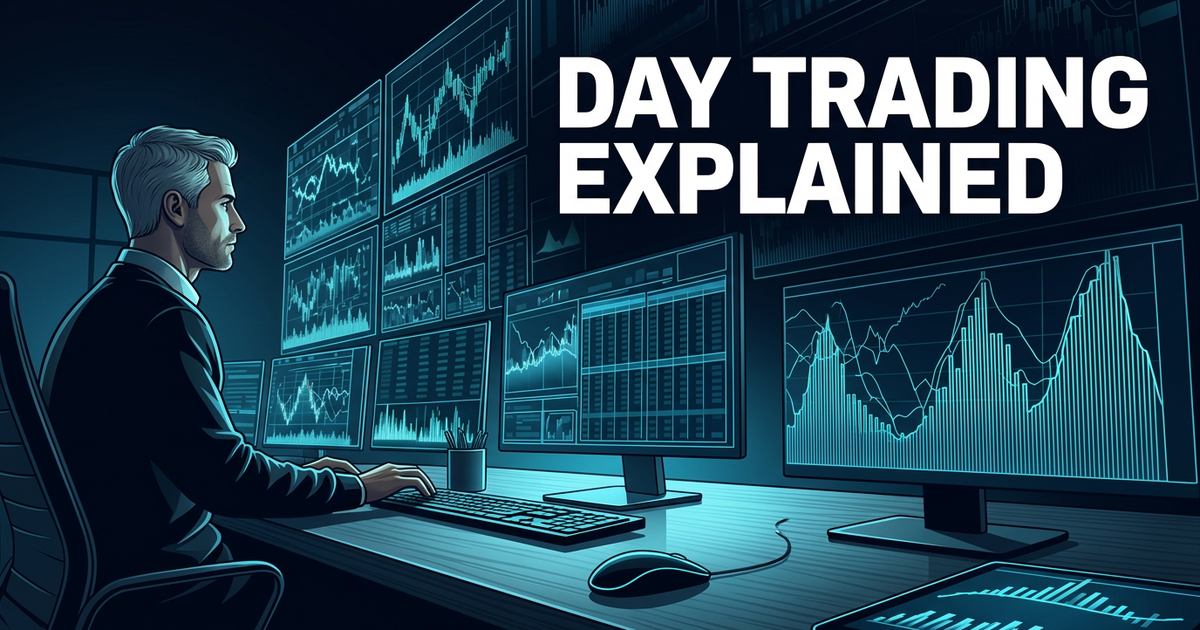
Day trading can seem like a complex and mysterious activity to many. But with the right information, it becomes easier to understand. This blog will break down the basics of day trading, how it works, and what you need to know if you're considering diving in.
What is Day Trading?
Day trading involves buying and selling financial instruments within a single trading day. This can include stocks, options, currencies, and futures. The main goal is to profit from small price fluctuations.
Unlike long-term investors who buy and hold securities for years, day traders close all their positions by the end of the trading day. This approach minimizes the risk of overnight market movements that could negatively affect their investments.
To succeed in day trading, you need to stay updated on various market trends and news. Even seemingly small events can significantly influence stock prices. For instance, a company's quarterly earnings report can create substantial price movements within a single day.
Day trading requires a high level of concentration and quick decision-making. Because the goal is to capitalize on small price movements, the entire process can feel like a fast-paced game of strategy and skill.
With the rise of low-cost online brokerage platforms, the tools for day trading have become accessible to everyone. This democratization means you don't need to be on Wall Street to trade like a pro. However, the risks involved remain the same, necessitating a thorough understanding of the market.
How Does Day Trading Work?
Day traders use various strategies to make decisions, including technical analysis, chart patterns, and market news. They rely on real-time data and advanced technology to execute trades quickly and efficiently.
Successful day traders often employ sophisticated trading software. These tools provide valuable insights through indicators, real-time charts, and algo-trading capabilities. One commonly used software is TradingView, which offers numerous functionalities tailored to day traders.
Another essential aspect is understanding how to time the market. Day traders often rely on market news to anticipate price movements. For example, they might buy a stock just before a positive earnings announcement and sell it when the price peaks shortly after the news is released.
Understanding market trends and crowd psychology is also crucial. If a stock is gaining traction and showing momentum, day traders may ride the upward wave for quick profits. Meanwhile, they might short sell if they expect a stock's price to fall.
Risk management is an essential component of day trading. Traders often use stop-loss orders to minimize potential losses. For example, you might set a stop-loss at 5% below your purchase price, ensuring you automatically sell the stock if it hits that limit.
What Tools Do Day Traders Use?
Day traders use a combination of trading platforms, charting software, and news services to stay informed and make quick decisions. High-speed internet and powerful computers are essential for executing multiple trades within seconds.
Among the most popular trading platforms are Interactive Brokers, NinjaTrader, and TradeStation. These platforms offer various features, including direct market access, high-speed order execution, and robust analytical tools.
Charting software like TradingView and MetaTrader 4 are indispensable. These tools allow traders to visualize market trends, identify patterns, and make informed decisions. Real-time data feeds provide up-to-date information, ensuring that traders do not miss any opportunity.
News services like Bloomberg and Reuters are also vital. Day traders need to stay on top of global events, earnings reports, and other market-moving news. Quick access to information can be the difference between a profitable trade and a loss.
Many traders also use sophisticated algorithms and automated trading systems. These technologies employ predefined criteria to execute trades automatically, minimizing human error and emotional decision-making.
Common Day Trading Strategies
Some popular day trading strategies include scalping, momentum trading, and range trading. Each strategy requires a different approach and understanding of market conditions.
Scalping involves taking advantage of small price gaps created by order flows or spreads. Scalpers make dozens or even hundreds of trades in a single day, aiming for small profits from each trade.
Momentum trading is based on the strength of current price trends. Traders focus on stocks that are moving significantly in one direction on high volume. The idea is to ride the momentum until it shows signs of reversing.
Range trading is another popular strategy where traders identify support and resistance levels. By buying at support levels and selling at resistance levels, traders aim to profit within a predetermined price range.
Another high-risk strategy used by day traders is fading. This involves betting against the prevailing trend by shorting stocks that have seen rapid gains. The trader aims to profit from the stock's expected retracement to its mean value.
Risks and Rewards of Day Trading
Day trading carries significant risk, and it's possible to lose more money than you invest. However, the potential for high rewards attracts many traders. It's crucial to manage risk through strategies like stop-loss orders and disciplined trading habits.
While the allure of substantial gains can be tempting, studies indicate that the majority of day traders do not achieve long-term profitability. According to research from the University of California, less than 3% of day traders are predictably profitable.
Leveraging is another double-edged sword in day trading. Although it can amplify returns, it also increases the potential for significant losses. Margin requirements and interest on borrowed funds can add another layer of complexity and risk.
However, for those with the right skills, attitude, and tools, day trading can be very lucrative. It's essential to follow a robust trading plan, continuously educate oneself, and remain adaptable to changing market conditions.
Ultimately, the success in day trading hinges on a mix of discipline, market knowledge, and mental fortitude. Being able to assess and manage risk meticulously can pave the way for consistent, albeit unpredictable, profits.
Tips for Getting Started in Day Trading
Before you start, educate yourself on the basics of day trading and the markets you're interested in. Practice with a demo account to hone your skills without risking real money. Start small and gradually increase your trading size as you gain confidence.
One excellent resource to consider is Dux Academy, where you can dive deep into the insights from an 8-figure trader, Steven Dux. This comprehensive course covers tested strategies and techniques designed to elevate your trading capabilities.
Join a trading community or forum to learn from experienced traders. Platforms like The Freedom Challenge offer access to webinars, watchlists, and private Discord channels where you can discuss real-time trades and strategies with other members.
Making the transition from simulation to real trading requires emotional readiness. Real money brings real emotions, and handling these effectively is crucial for success. Start by trading small amounts to get comfortable with the process.
Lastly, keeping a journal of all your trades can be extremely beneficial. Documenting your strategies, successes, and failures helps you learn from your experience and adjust your strategies for improvement.
Wrapping Up Day Trading
Day trading is a dynamic and fast-paced form of trading that many find exciting and potentially profitable. By understanding the basics, choosing the right tools, and learning from experts, you can navigate this complex world more effectively. Always remember, practice and education are your allies in becoming a successful day trader.
Join Steven Dux Trading Community
If you're looking to enhance your trading knowledge and skills, consider joining the Steven Dux Trading Community. Led by multimillionaire trader Steven Dux, this community provides a wealth of resources, including exclusive educational content, live trading sessions, and a supportive network of like-minded traders.
As a member, you'll gain insights into Steven Dux's proven trading strategies, risk management techniques, and the psychological aspects of trading. Whether you're a beginner looking to start your trading journey or an experienced trader seeking to refine your skills, the Steven Dux Trading Community offers a unique opportunity to learn from one of the most successful day traders in the industry.
Don't miss this chance to elevate your trading game. Visit our website today to learn more about the Steven Dux Trading Community and how you can become a part of this exclusive group of traders.
« Back to Blog
Related Articles
12 Steven Dux Quotes to Inspire Your Trading Journey
10 minute read
10/12/2024 3:26pm
How Can Day Trading Education Help Me Succeed?
6 minute read
10/12/2024 3:10pm
Understanding Trading Performance Analysis for New Traders
8 minute read
10/12/2024 3:18pm